

What does it take to build an inclusive culture when organisations are under pressure to deliver, transform and move fast?
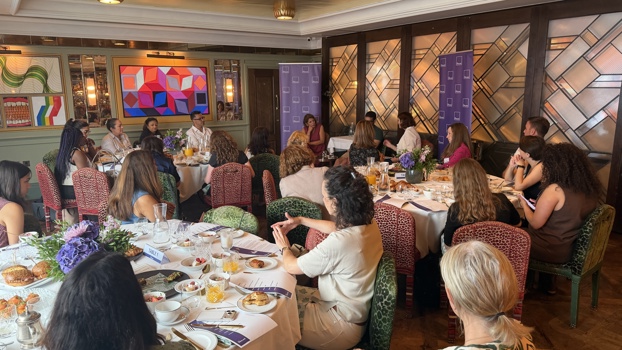
This was the focus of our breakfast event held this week at The Ivy Soho, where we brought together senior people leaders for a candid discussion on the realities of leading inclusion in a high-performance, high-change environment.
Hosted by The Pipeline’s Client Engagement Director, Rhonda Martin, and joined by Pavita Cooper - Chair of the 30% Club UK, and Lee Chambers - CEO of Male Allies UK, the conversation explored a challenge many organisations are grappling with right now: How do you ensure inclusion remains a strategic priority as external pressures intensify and the pace of change accelerates?
We were also delighted to be joined by The Pipeline’s Chair, Baroness Geeta Nargund, who shared her perspective on why this conversation is so closely connected to The Pipeline’s mission: accelerating leadership and helping organisations build cultures where talent can thrive. She also challenged us to think carefully about the language we use, asking whether inclusion can sometimes sound like asking to be let in, and making the case for equality as a clearer and more assertive principle.
One message came through clearly: inclusive culture cannot be treated as a “nice to have” that survives only when conditions are favourable. In times of pressure, change and uncertainty, it matters even more. Organisations that sustain performance over time are those that create environments where people feel valued, supported and able to contribute at their best.
Some key themes that stood out from the discussion include:
➡️ Inclusion must move at the pace of the business
It should be embedded into the way organisations operate, so it evolves alongside growth, change and transformation rather than sitting separately from them.
➡️ Progress requires courage, not just process
Systems and frameworks matter, but so does the conviction to hold the line on inclusion, even when external pressures or shifting narratives make it harder.
➡️ Culture is shaped in the everyday
Inclusive organisations are built through day-to-day decisions, behaviours and leadership choices. Culture must be addressed at its roots, not only through policy.
It was a brilliant morning of insight, challenge and shared perspective, whilst also being a strong reminder that inclusion is not separate from performance. It is fundamental to it.
Thank you to everyone who joined us, and to Rhonda, Pavita, Lee and Geeta for such a thoughtful and energising discussion.


